“Doctor, are you saying a machine will do my surgery while you stand in the corner?” “Is this just a fancy way of saying the surgery is more expensive?”
When patients first hear about Robotic Surgery, the reaction is often a mix of fascination and fear. The word “robotic” sounds like science fiction, conjuring images of automated machines making independent decisions.
In reality, the truth is far more grounded. Robotic surgery is simply a highly advanced tool that allows a surgeon to operate with great precision. For patients seeking a Robotic Cancer Surgeon in Mumbai, understanding the reality behind the myths is the first step toward a confident recovery.
Myth 1: “The Robot Does the Whole Surgery on Its Own”
This is the most common fear, and it needs to be cleared up immediately. A robotic platform does not think, plan, or act independently. It does not plan the surgical steps. .
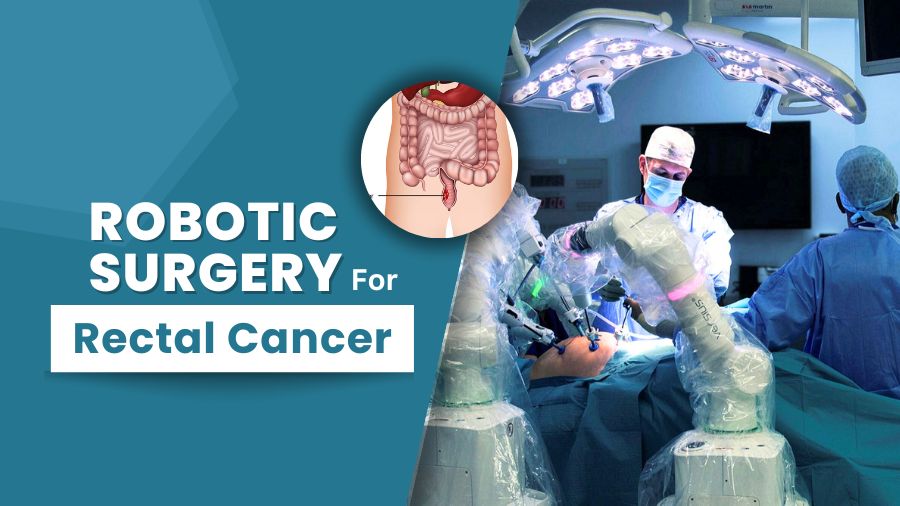
The robotic system is a sophisticated tool that translates the surgeon’s hand movements into micro-movements inside the body. Think of it as a master surgeon with “super-powers”:
- High-Definition 3D Vision: The surgeon sees the surgical field magnified in 3D.
- Elimination of Tremor: The system filters out even the tiniest human hand shakes, ensuring every cut is perfect.
- Wristed Instruments: Unlike traditional laparoscopic tools that are straight, robotic arms have “wrists” that can rotate in ways the laparoscopic instrument cannot.
The verdict: Your surgeon operates on you. The robotic system simply helps them do it with greater precision in narrow, challenging areas like the pelvis.
Myth 2: “Robotic Surgery is Just Marketing—There Are No Real Benefits”
Patients deserve a balanced answer here. While it isn’t “magic,” the benefits of robotic-assisted surgery are clinically significant, especially in colorectal cancer cases.
The colon and rectum are located in tight, crowded spaces surrounded by delicate nerves and other structures. The robotic approach offers:
- Nerve Preservation: In rectal cancer surgery, working millimeters away from nerves that control bladder and sexual function is common. The robot’s precision helps protect these structures.
- Sphincter Preservation: Greater accuracy increases the possibility of preserving natural bowel function and avoiding a permanent stoma.
- Minimal Trauma: Because the instruments are so precise, there is typically less blood loss and smaller incisions, leading to a shorter hospital stay and reduced post-operative pain.
Myth 3: “If I Need Robotic Surgery, My Case Must Be Very Severe”
This is another common misconception. Many patients assume the “big guns” are only brought out when a situation is dire.
In reality, robotic surgery is an approach, not a severity label. A surgeon may recommend it because of your specific anatomy, the location of a tumor, or the need for extreme precision to avoid collateral injury to nearby organs. Whether it is a complex benign condition or a cancer, the robotic platform is chosen to ensure the best possible functional outcome—not just because a case is “severe.”
What Actually Happens During the Procedure?
Patients often feel calmer when the “black box” of surgery is opened. Here is the typical flow of Robotic Cancer Surgery:
- Anesthesia: You are given general anesthesia and will be completely asleep.
- The “Keyholes”: Small incisions (5–10mm) are made to allow the robotic arms and camera to enter.
- The Console: Your surgeon sits at a specialized console in the operating room. They look through a high-definition viewfinder and move specialized controllers (similar to joysticks).
- The Operation: Every movement of the surgeon is translated in real-time to the robotic instruments. The surgeon remains in total control from the first incision to the final stitch.
Why Does the Surgeon Matters More Than the Machine?
Technology is only as good as the person using it. Robotic surgery is specialized work that requires years of dedicated training. When looking for a Robotic Cancer Surgeon in Mumbai, you should look for disease-specific expertise.
The best outcomes happen when advanced technology meets high-volume surgical experience. This is particularly relevant in Mumbai, where world-class infrastructure at Jaslok Hospital, H. N. Reliance Foundation Hospital, and Nanavati Max allows surgeons to perform these complex procedures with full institutional support.
What Patients Really Want to Know: “Why Recommend it for Me?”
This is the right question to ask during a consultation. A patient shouldn’t be asking if the surgery is “modern” or “popular,” but rather: “Why is this the right option for my body and my disease?”
A good consultation with a Robotic Cancer Surgeon in Mumbai should explain:
- What specific condition is being treated.
- Whether surgery is absolutely necessary.
- Why robotic surgery is being considered over laparoscopy or open surgery.
- The expected benefits and potential limitations.
- What recovery will look like specifically for you.
So, What Actually Happens During the Procedure?
Patients often feel calmer when they understand the process simply. It is far from a “machine taking over“:
- Anesthesia: You are given general anesthesia and are completely asleep.
- Incisions: Small “keyhole” incisions are made.
- Positioning: Robotic instruments are carefully positioned by the surgical team.
- The Console: The surgeon sits at a console in the same room, controlling every movement.
- Direct Control: Every movement of the robotic arm is directed by the surgeon’s hands.
- The Plan: The diseased part of the colon or rectum is treated exactly according to the surgical plan.
Is Robotic Surgery Always the Best Choice?
Honesty matters here: No, not always. The best choice depends on your diagnosis, previous surgeries, the stage of the disease, and your overall health. Robotic surgery is one important tool, but it is not a magic answer for every person. This is exactly why surgeon expertise matters more than the machine itself. A highly skilled surgeon knows when the robot offers a real advantage and when a different approach is more appropriate.
“My team and I strive to deliver compassionate, world-class care—offering each patient a holistic path to healing. If you or your loved one is considering robotic surgery, feel free to reach out for a detailed consultation”
– Dr Chintamani Godbole
Read here: The Rise of Robotic Surgery
Why Does Experience Matters More Than the Word “Robotic”?
Patients sometimes get impressed by the technology and forget to ask: Who is using it? Robotic Cancer Surgery is specialized work. When looking for a specialist in Mumbai, focus on:
- Disease-specific expertise (specifically colorectal oncology).
- Advanced training (such as UK fellowships or dedicated robotic certifications).
- Hospital support systems (Practicing at top-tier centers like Jaslok Hospital, H. N. Reliance Foundation, or Nanavati Max).
- Realistic counseling, not “sales” language.
If you are being advised to undergo Robotic Cancer Surgery, remember: you are not being handed over to a robot. You are being operated on by a surgeon who is using a robotic system to achieve better precision. Once that fear is addressed, you can focus on the real goal—getting healthy and back to your life.
“`html
“`